Café Culture Elective
Semester long
From: FLE1
Course Description
Do you enjoy cooking, creating café-style food and learning what happens behind the scenes in a café? Café Culture is a practical, hands-on subject where students develop food preparation skills while exploring the world of hospitality, customer service and café operations.
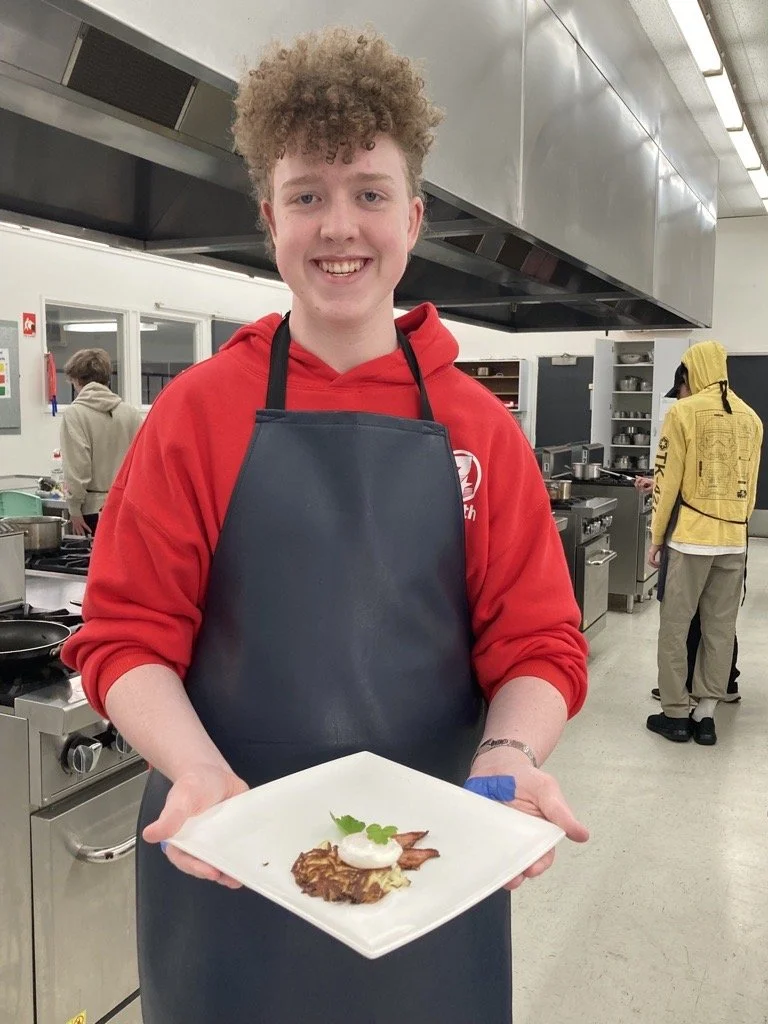
Throughout the semester, students will prepare a range of café-style meals, beverages and baked products while developing essential kitchen skills including food safety, hygiene, knife skills, food presentation, teamwork and time management. Students will also investigate café culture, food trends, sustainability and how cafés operate in today's hospitality industry.
The course develops practical cooking skills alongside creativity, communication, collaboration and problem-solving. Students will work towards planning and producing food that meets a design brief before participating in a pop-up café experience.
Design Brief
Design and produce a café-style food product or beverage that meets the needs of a selected target audience. Students will investigate current café trends, consider sustainability, budget and presentation, and evaluate how effectively their final product meets the design brief.
Students will:
Prepare a variety of café-style meals, drinks and baked products.
Develop safe food handling and kitchen hygiene practices.
Build confidence using commercial kitchen equipment.
Investigate café menus, food trends and customer expectations.
Explore sustainable food choices and reduce food waste.
Develop skills in planning, organisation, teamwork and communication.
Evaluate and improve practical cooking techniques.
Future Pathways
This subject provides an excellent foundation for students interested in:
Hospitality
Commercial Cookery
Baking and Patisserie
Café Operations
Food Studies
Tourism and Events
Customer Service
No previous cooking experience is required. Students simply need a positive attitude, a willingness to participate and an interest in learning practical life and hospitality skills.
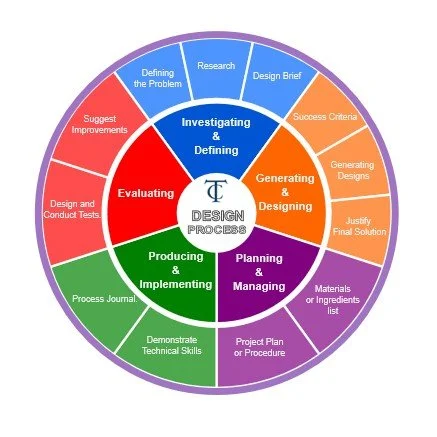
The TC Design Process guides students through five stages of purposeful, iterative design practice.
Investigating & Defining – Define the problem, conduct research, and develop a design brief.
Generating & Designing – Establish success criteria, generate design ideas, and justify the final solution.
Planning – Prepare a materials/ingredients list and a project plan or procedure.
Producing & Implementing – Demonstrate technical skills and maintain a process journal.
Evaluating – Design and carry out testing, and suggest improvements.
This consistent five-stage process is applied across all year levels and subject areas within Technologies, giving students a shared design language and a structured approach to solving real-world problems.