Food Technology Elective
semester 1 & 2
Food Technology is an engaging, dynamic, and rewarding subject that develops practical life skills while fostering creativity, problem-solving, and confidence in the kitchen. Students explore the important role food plays in our daily lives and its connection to health, wellbeing, and sustainability.
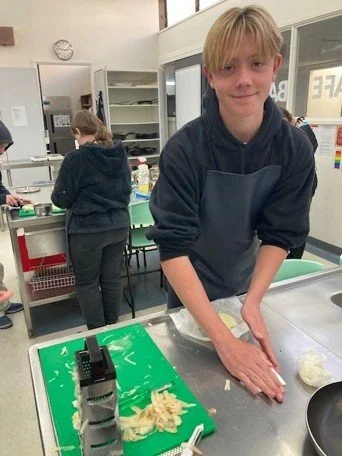
The course combines practical and theory lessons, giving students the opportunity to develop essential cooking skills while exploring nutrition, food science, global cuisines and food safety. Students also follow the design process to investigate, plan, produce, and evaluate a variety of food products.
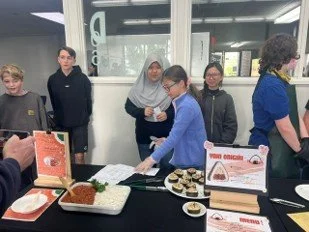
A strong community focus encourages students to work collaboratively and enjoy sharing food in a supportive environment. Practical classes introduce a range of cooking techniques, including steaming, baking, grilling, and roasting, using seasonal produce, with ingredients often sourced from our permaculture garden.
Students document their learning journey in OneNote through photographs, sensory analyses, and reflections, while their practical and theoretical progress is assessed through learning tasks. Excursions to markets, restaurants, hotels, and food businesses provide authentic industry experiences and enrich classroom learning.
This subject suits the novice to the experienced as it is designed and developed for the skills of each student. Students can take it to develop their skills be it for personal growth and or as part of an academic pathway.

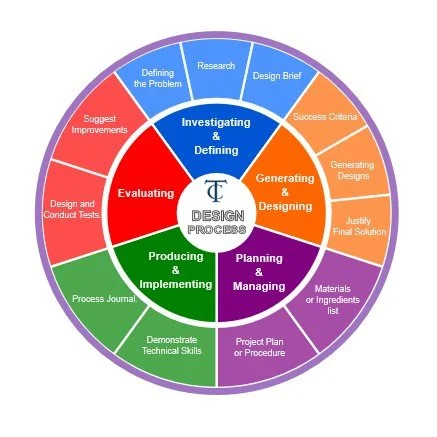
The TC Design Process guides students through five stages of purposeful, iterative design practice.
Investigating & Defining – Define the problem, conduct research, and develop a design brief.
Generating & Designing – Establish success criteria, generate design ideas, and justify the final solution.
Planning – Prepare a materials/ingredients list and a project plan or procedure.
Producing & Implementing – Demonstrate technical skills and maintain a process journal.
Evaluating – Design and carry out testing, and suggest improvements.
This consistent five-stage process is applied across all year levels and subject areas within Technologies, giving students a shared design language and a structured approach to solving real-world problems.