

VCE Theatre Studies
Units 1&2 offered in 2027
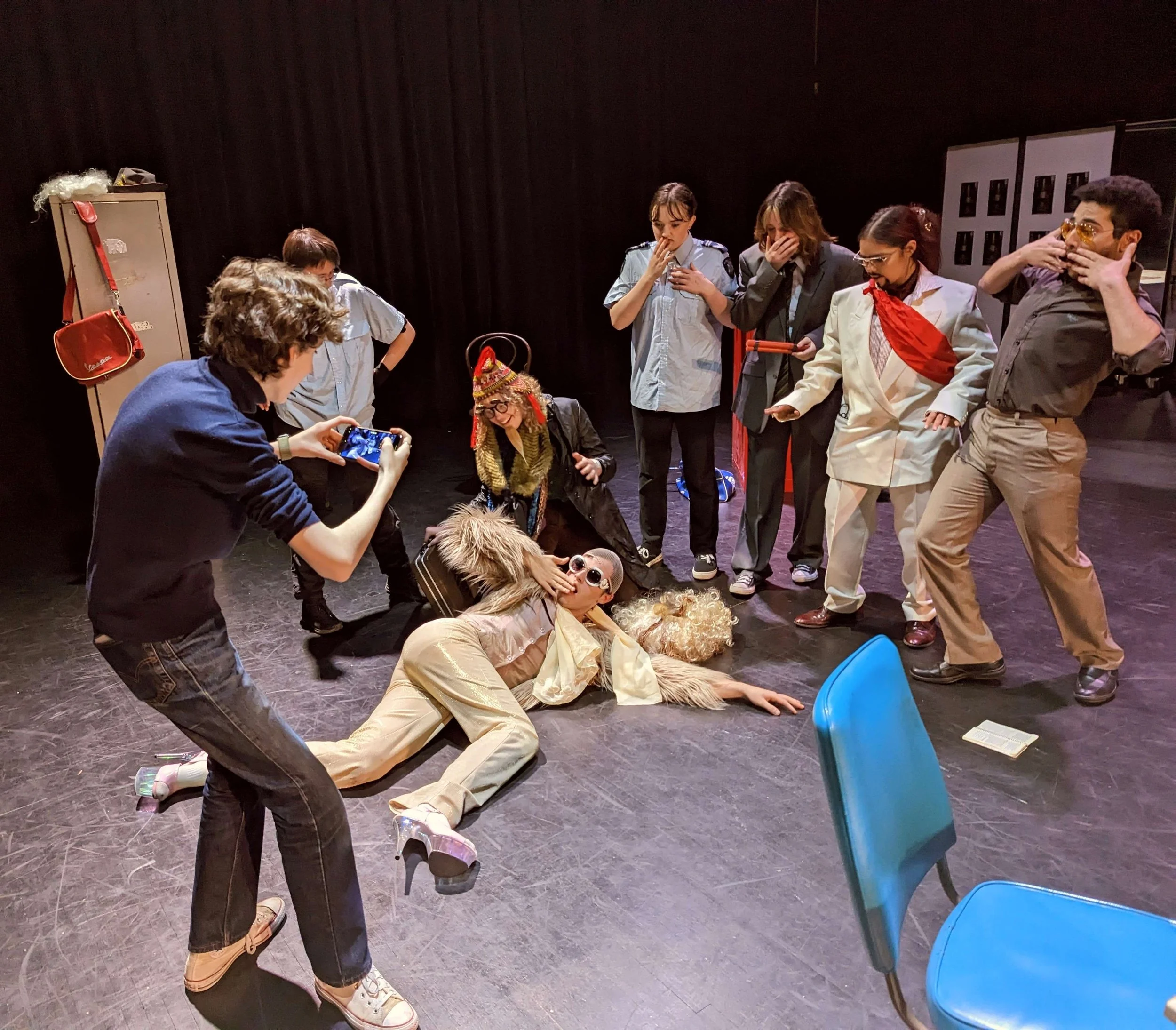
In VCE Theatre Studies students interpret scripts from the pre-modern era to the present day and produce theatre for audiences. Through practical and theoretical engagement with scripts they gain an insight into the origins and development of theatre and the influences of theatre on cultures and societies. Students apply dramaturgy and work in the production roles of actor, director and designer, developing an understanding and appreciation of the role and place of theatre practitioners.
Throughout the study, students work individually and collaboratively in various production roles to creatively and imaginatively interpret scripts and to plan, develop and present productions. Students study the contexts – the times, places and cultures – of these scripts, as well as their language. They experiment with different possibilities for interpreting scripts and apply ideas and concepts in performance to an audience. They examine ways that meaning can be constructed and conveyed through theatre performance. Students consider their audiences and in their interpretations incorporate knowledge and understanding of audience culture, demographic and sensibilities.
Students learn about innovations in theatre production across different times and places and apply this knowledge to their work. Through the study of plays and theatre styles, and by working in production roles to interpret scripts, students develop knowledge and understanding of theatre, its conventions and the elements of theatre composition. Students analyse and evaluate the production of professional theatre performances and consider the relationship to their own theatre production work. Students learn about and demonstrate an understanding of safe, ethical, and responsible personal and interpersonal practices in theatre production.
Aims
This study enables students to:
acquire knowledge of theatre including its styles, purposes and audiences • interpret scripts through engagement in the production process
experiment creatively and imaginatively with theatrical possibilities and elements of theatre composition
apply knowledge of production roles and the skills to interpret scripts
understand themselves as theatre practitioners and audience
appreciate theatre and its significance as an art form
apply safe and ethical personal and interpersonal practices in theatre production
conduct performance analysis and production evaluations and apply learning to their own theatre production work
apply thinking, problem-solving and communication skills to creatively participate in the theatre life of their community

Structure
The study is made up of four units.
Unit 2: Contemporary theatre styles and movements
Unit 3: Producing theatre
Unit 4: Presenting an interpretation
Unit 1: Pre-modern theatre styles and conventions
This unit focuses on the application of acting, direction and design in relation to theatre styles and their conventions pre-1945, that is, from the era up to and including 1944. Students work in production roles with scripts from specific periods that fall between the beginning of theatre history until the end of 1944 focusing on at least two theatre styles, their conventions and histories. They study innovations in theatre production through the styles they explore and apply this knowledge to their interpretations of works.
Students develop knowledge and skills about theatre production processes, including dramaturgy, planning, development, and performance to an audience, and they apply this knowledge and skill to their own work. They study safe, ethical, inclusive and sustainable (where possible, environmentally sustainable) working practices in theatre production.
Theatre up to and including 1944 encompasses scripts from a wide range of styles including, but not limited to, Agitprop, Ancient Greek, Ancient Roman, Beijing Opera, Bunraku, Commedia Dell ’Arte, Epic Theatre (early works), Elizabethan, Expressionism, Kabuki, Liturgical, Medieval, Miracle plays, Musical theatre, Naturalism, Neoclassical, Noh, Melodrama, Realism, Surrealism, Theatre of Cruelty and Wayang Kulit Theatre.
Students begin to develop skills of performance analysis and apply these to the analysis of a play in performance.
Unit 2: Modern theatre styles and conventions
In this unit, students study contemporary theatre practice through the exploration of scripts from 1945 to the present day. They select scripts from either two distinct theatre styles OR a theatre movement between 1945 and the present day. In either option, students should study at least one Australian play.
Contemporary theatre movements can be defined as performance styles from 1945 onwards that push the boundaries of traditional theatre styles and conventions. They often consist of a range of conventions and features and can cut across art forms, genres and disciplines.
This unit focuses on the application of acting, direction and design in relation to contemporary theatre practice from 1945 to the present day. Students work in production roles to interpret scripts. They study developments and innovations in theatre and apply this knowledge to their own work.
Students develop knowledge of, and skills relating to, theatre production processes that include dramaturgy, planning, development and presentation to an audience, and they apply these to their own work. They study safe, ethical, inclusive and sustainable working practices (where possible, using environmentally sustainable approaches) in theatre production. They develop skills in theatre production analysis and evaluation, which they apply to their own work and to the work of other practitioners.
Examples of theatre styles post-1945 include Kitchen Sink Drama, Immersive theatre, Verbatim theatre, Theatre of the Absurd, Australian realism, Musical theatre, Butoh, Forum theatre.
Examples of theatre movements post-1945 include Theatre-in-education, Aboriginal and Torres Strait Islander theatre, Feminist theatre, Post-Colonial theatre, Queer theatre, Black Rights theatre, Theatre for Climate Justice, Physical theatre, Cross-cultural theatre, Post-Dramatic theatre, Memory plays.
Unit 3: Producing theatre
In this unit, students develop an interpretation of a script through the three stages of the theatre production process: planning, development and presentation. Students specialise in two production roles, working collaboratively to interpret and realise the production of a script. They apply the knowledge developed during this process to analyse and evaluate how production roles can be used to interpret script excerpts previously unstudied. Students develop knowledge of elements of theatre composition and safe, ethical, inclusive and sustainable (where possible, environmentally sustainable) working practices in the theatre.
Students attend a performance selected from the prescribed VCE Theatre Studies Playlist and analyse and evaluate the interpretation of the script of the performance. The playlist is published annually on the VCAA website.
Unit 4: Presenting an interpretation?
In this unit, students study a scene and an associated monologue from a script. They initially develop an interpretation of the prescribed scene. This work includes exploring theatrical possibilities and using dramaturgy across the three stages of the production process. Students then develop an interpretation of the monologue that is embedded in the specified scene. To realise their interpretation, students work in production roles as an actor and director, or as a designer.
Students’ work for Areas of Study 1 and 2 is supported through the analysis and evaluation of a production they attend for their work in Area of Study 3. The production must be selected from the prescribed VCE Theatre Studies Playlist and must be different from the production they analyse in Unit 3. The playlist is published annually on the VCAA website. Students analyse and evaluate acting, direction and design in the selected production and consider the application of theatre technologies.
In conducting their work in Areas of Study 1 and 2, students further develop their knowledge and application of inclusive and sustainable (where possible, environmentally sustainable) theatre practices.
Assessment
Satisfactory Completion:
The award of satisfactory completion for a unit is based on a decision that the student has demonstrated achievement of the set of outcomes specified for the unit. This decision will be based on the teacher’s assessment of the student’s performance on assessment tasks designated for the unit.
Levels of Achievement
Units 1 and 2:
Procedures for the assessment of levels of achievement in Units 1 and 2 are a matter for school decision.
Units 3 and 4:
The Victorian Curriculum and Assessment Authority will supervise the assessment of all students undertaking Units 3 and 4. In VCE Theatre Studies, the students’ level of achievement will be determined by School-assessed Coursework (SACs) and end-of-year examinations.
Units 3 and 4 School-assessed Coursework: 45 %
End-of-year Production area examination: 25 %
End-of-year written examination: 30 %